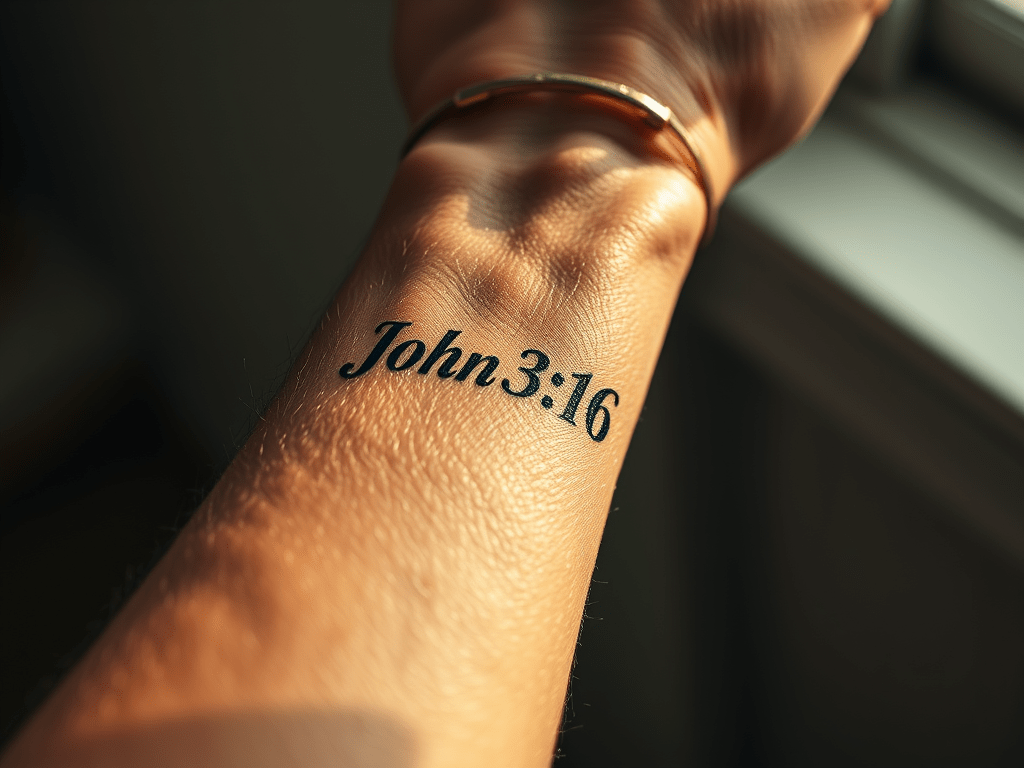
When it comes to tattoos, opinions in the faith community are often polarized. Some view them as taboo, forbidden by Scripture, while others embrace them as expressions of freedom in a “come as you are” faith. Today, we’ll dive into the question: Are tattoos biblically permissible, or are they off-limits? Rather than leaning on denominational biases or cultural norms, let’s explore what Scripture—particularly Leviticus 19:28—says, alongside insights from the Dead Sea Scrolls and other biblical texts, to guide us to a decision rooted in Yehovah’s Word.
The Key Verse: Leviticus 19:28
Leviticus 19:28 (ESV) states:
“You shall not make any cuts on your body for the dead or tattoo yourselves. I am Yehovah.”
At first glance, this seems like a straightforward prohibition. The King James Version translates it as, “nor print any marks upon you,” while the Septuagint (a Greek translation predating the New Testament) uses grammata (letters), suggesting “tattooed incisions” or “cuts of letters.” The Hebrew words for “marks” (Strong’s H3793) and “cutting” (H7085) appear only here in the Old Testament, making this verse unique. So, what’s the context, and what does this mean?
Context is Everything
Leviticus 19:26-31 forms a cohesive unit, bookended by warnings against pagan practices like interpreting omens, consulting mediums, and necromancy. Verse 26 prohibits eating flesh with blood and divination, while verse 31 reiterates avoiding mediums and necromancers. Smack in the middle, we find commands against cutting hair on the temples, marring beards, and making cuts or tattoos “for the dead.” The repeated declaration, “I am Yehovah,” emphasizes loyalty to Him alone, not other gods or spirits.
The Dead Sea Scrolls (11Q19, Temple Scroll) clarify this further:
“You are children belonging to Yehovah your God. Therefore, you are not to gash yourselves nor to shave your forelocks on behalf of the dead… You must not incise cut your flesh or tattoo yourselves for the dead. For you are a people holy to Yehovah your God.”
This interpretation ties tattoos directly to mourning rituals for the dead, a common practice among surrounding nations who buried their dead in homes or marked themselves to honor or appease them. Yehovah commands His people to be set apart, rejecting these practices to reflect their exclusive devotion to Him.
Who Was Leviticus Written For?
Leviticus is named for the Levites, the priestly tribe tasked with representing Yehovah (Leviticus 1:1-2). Leviticus 21 reinforces this, prohibiting priests from similar acts—cutting hair, shaving beards, or making cuts on their bodies—to remain holy and not profane God’s name (Leviticus 21:5-6). These commands underscore that physical appearance and actions reflect spiritual allegiance. Tattooing or cutting for the dead aligns with pagan worship, not Yehovah’s holiness.
Marks in Scripture: Good or Bad?
The Bible mentions marks elsewhere, with varied meanings:
- Cain’s Mark (Genesis 4:15): Yehovah places a mark (ot, a sign) on Cain to protect him, though it’s tied to his exile as a murderer. The mark’s function matters more than its form—it signals divine protection despite his sin.
- Ezekiel’s Mark (Ezekiel 9:4-6): A tav (an X-shaped letter in ancient Hebrew) is placed on the foreheads of those who mourn Jerusalem’s sins, marking them for protection. This is a positive sign of faithfulness.
- Job’s Signature (Job 31:35): Job uses tav as his “signature,” affirming his righteousness, akin to a modern “I approve this message.”
- Isaiah’s Mark (Isaiah 44:5): Non-Israelites declare allegiance to Yehovah by writing “I am Yehovah’s” on their hands—a positive mark of devotion, contrasting with pagan markings.
- Third Maccabees and Revelation: In Third Maccabees 2, a Greek ruler brands Judeans with an ivy leaf for Dionysus, marking allegiance to a false god. Similarly, Revelation 13:16-17 describes the mark of the beast on the hand or forehead, symbolizing worship of an anti-God figure. Conversely, Revelation alludes to Isaiah, suggesting a mark for Yehovah’s faithful.
The Greek word grammata in the Septuagint’s Leviticus 19:28 is telling. Used in Luke 16:6 for a “record of debts,” it implies tattoos might signify owing allegiance to someone or something. Yehovah’s command, “I am Yehovah,” suggests He alone should hold that
 Word of Truth Fellowship
Leave a comment