Amos chapter 9, though only 15 verses, delivers a powerful conclusion to the prophet’s message. Unlike the symbolic visions of chapters 7 and 8—where God shows Amos locusts, fire, or a basket of summer fruit and asks, “What do you see?”—chapter 9 unveils a direct revelation. The veil lifts, and Amos sees Yehovah standing at the heart of worship, pronouncing judgment and promising restoration.
Yehovah at the Altar – Striking the Heart of Worship
Amos 9:1 opens with a striking image: “I saw Yehovah standing by the altar.” This is the temple altar, post-Solomon, in the outer court where sacrifices were visible to all. The Septuagint reads, “Strike the mercy seat,” while the NIV and KJV mention smiting the “capitals” or “lintel” of the temple structure—ornamental pillar tops, possibly echoing the menorah’s floral design, that provide stability. Yehovah targets the core of worship, shaking its foundations. Without the mercy seat or the ark, the temple is empty, and false worship—evident in Jeroboam’s era with its wrong days, places, and practices—faces divine rejection. “The gateways will be shaken,” and none will escape judgment.
No Place to Hide from Divine Judgment
Verses 2-4 emphasize the inescapability of God’s judgment. Whether hiding in Sheol, ascending to heaven, retreating to Mount Carmel’s summit, or sinking into the sea’s depths, Yehovah’s reach is absolute. He commands the “dragon” (nachash in Hebrew, drakōn in Greek), a term tied to Leviathan (Job 41, Isaiah 27:1) and the serpent of Genesis 3, showing His sovereignty even over chaos. In captivity, the sword awaits. “I will set my eyes upon them for evil, not for good,” declares Yehovah, underscoring that false worship and pride offer no security.
Sovereign Over Creation
Verses 5-6 affirm Yehovah’s dominion. As “Adonai Yehovah,” He shakes the earth, summons the sea, and builds the heavens—not merely conquering like pagan gods but creating. No corner of creation is beyond His reach, reinforcing the futility of escaping His judgment.
No Favorites Among Sinners
In verses 7-8, Yehovah challenges Israel’s complacency: “Are you not like the Kushites to me?” The Exodus, a pivotal event, doesn’t grant automatic favor. Like the Philistines or Arameans, Israel faces judgment as part of the “kingdom of sinners.” Yet, mercy persists: “I will not completely remove the house of Jacob.” J. Maier notes in The Message of Amos that Israel treated the Exodus like a talisman, akin to believing “a man shall live forevermore because of Christmas Day.” Past events don’t guarantee salvation; only repentance does.
The Winnowing Sift
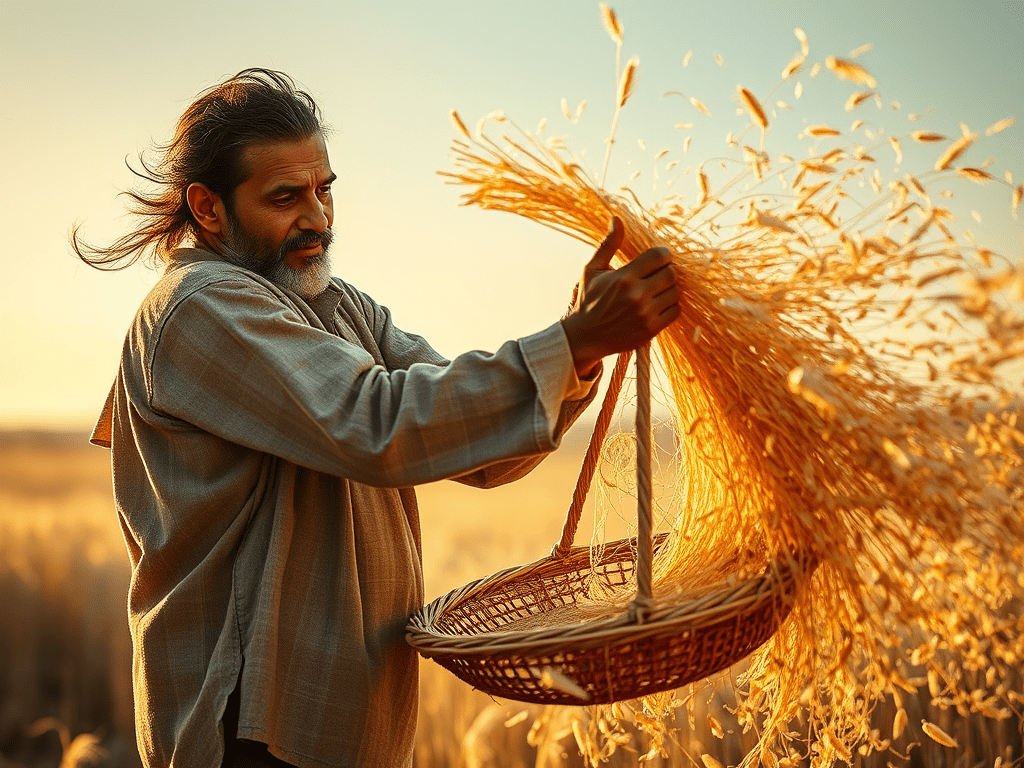
Verses 9-10 describe God’s sifting of Israel among the nations, like grain tossed to separate seed from chaff. Sinners who claim, “Evil won’t touch us,” face the sword. This challenges notions like “once saved, always saved,” echoing Messiah’s call to endure (Luke 22). False security in religion or lineage crumbles.
The Pivot to Restoration – “Your God”
Verses 11-15 shift to hope. Yehovah promises to “raise up the tent of David,” a reference to the Messiah and the Feast of Tabernacles. This restoration extends to “the remnant of the people” and “all nations” seeking Him (Acts 15 quotes this, using “mankind” over “Edom”). The earth will flourish, captives return, cities rebuild, and Israel’s people will be planted in their land, never uprooted. This fivefold restoration—king, nations, earth, people, land—culminates in Yehovah as “your God,” a promise of enduring relationship despite judgment.
Amos 9 confronts false worship and pride but offers hope through repentance and restoration. Read the full book to grasp its context, and let it challenge assumptions about security in religion or heritage. Yehovah’s word, though piercing, calls us to endure and seek His kingdom.
Yehovah bless you and keep you. Yehovah make His face shine upon you and be gracious. Yehovah lift His countenance upon you and give peace in Yeshua’s name. Amen.
 Word of Truth Fellowship
Leave a comment