Welcome back to our ongoing series on the Book of Jonah! If you’re just joining us, we’ve journeyed through Chapters 1 and 2, exploring themes of rebellion, prayer, and divine intervention. Today, we’re diving into Chapter 3—a chapter that mirrors Chapter 1 in many ways, emphasizing second chances and profound repentance.
The Mirror of Mercy: Jonah’s Second Commission
Chapter 3 picks up right after Jonah’s dramatic deliverance from the fish, mirroring Chapter 1 but with a pivotal twist. It’s all about second chances—Jonah receives his assignment again, but now the narrative shifts from human wrath to divine mercy, and vice versa. Jonah starts calm, viewing God as a figure of wrath, while God appears stern. By Chapter 4 (spoiler alert), roles reverse: Jonah rages, and God reveals His compassionate side. This literary contrast beautifully illustrates God’s character.
We’re reading from the Lexham English Bible:
Jonah 3:1-10
Then the word of Yahweh came to Jonah a second time, saying, “Get up! Go to Nineveh, the great city, and proclaim to it the message that I am telling you.” So Jonah got up and went to Nineveh according to the word of Yahweh. (Now Nineveh was an extraordinarily great city—a journey of three days across.) Jonah began to go into the city a journey of one day, and he cried out and said, “Forty more days and Nineveh will be demolished!”
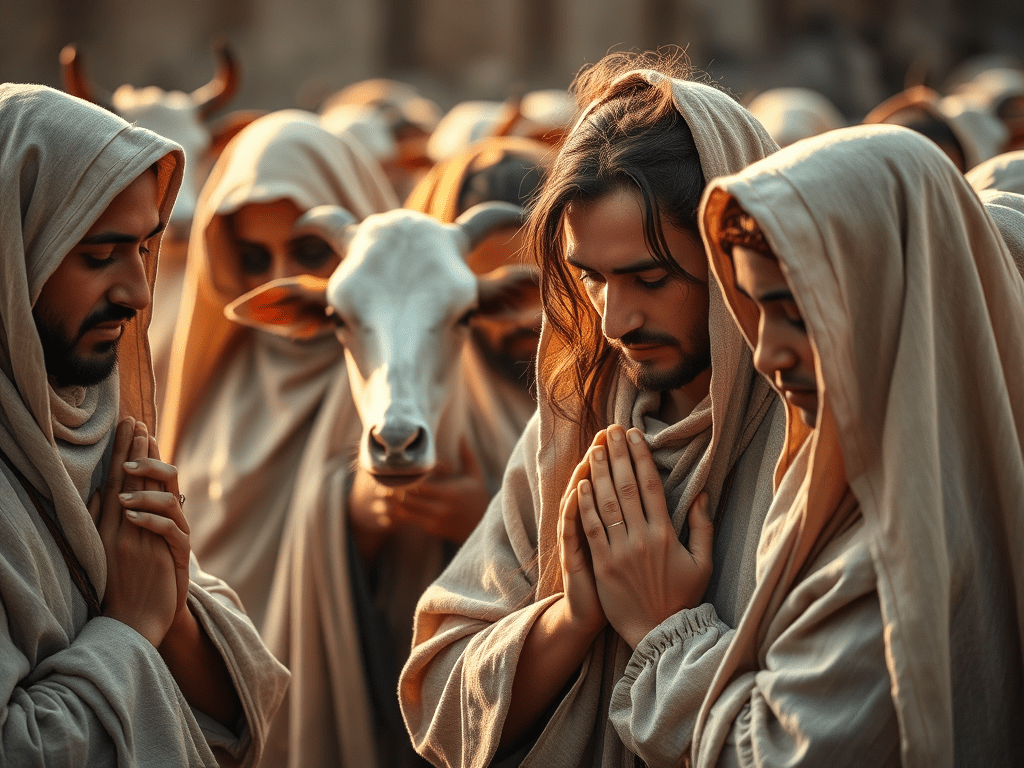
And the people of Nineveh believed in God, and they proclaimed a fast and put on sackcloth—from the greatest of them to the least important. And the news reached the king of Nineveh, and he rose from his throne and removed his royal robe, put on sackcloth, and sat in the ashes. And he had a proclamation made, and said, “In Nineveh, by a decree of the king and his nobles: “No human being or animal, no herd or flock shall taste anything! They must not eat, and they must not drink water! And the human beings and the animals must be covered with sackcloth! And they must call forcefully to God, and each must turn from his evil way and from the violence that is in his hands. Who knows? God may relent and change his mind and turn from his blazing anger so that we will not perish.”
And God saw their deeds—that they turned from their evil ways—and God changed his mind about the calamity that he had said he would bring upon them, and he did not do it.
Jonah is the only prophet in Scripture to receive his commission twice—no one else needed a redo! God simply says, “Arise, go to Nineveh, that great city, and proclaim the message I give you” (v. 2). The writer builds anticipation in verse 3: “So Jonah …got up… and went to Nineveh…” Will he run again? After the storm and the fish, is he done? But no—he obeys, according to Yehovah’s word.
Notice what God doesn’t do: He doesn’t dredge up Jonah’s past disobedience, his vows, or his time in Sheol. No reminders like, “Remember, I rescued you!” God just offers a fresh start. This echoes His pattern with Israel—despite repeated rebellion, He sends prophets or judges without harping on failures (e.g., Judges). As Psalm 103:12 says, He removes our sins as far as east is from west, casting them into the sea’s depths. God pushes us forward, not backward.
The Great City: Size, Significance, and Symbolism
Nineveh is called “an extraordinarily great city, a journey of three days across” (v. 3). Literally, it could translate as “a great city to God” or “to the gods” (le-Elohim). Some see it as God viewing Nineveh as important; others note Assyria’s idolatry, making it “great to the gods” with temples and false worship. This ambiguity is intentional—Nineveh matters to God despite its wickedness.
Archaeology shows Nineveh wasn’t literally three days across; even expanded under Ashurbanipal, it was more like a one-day walk. So why “three days”? It echoes Jonah’s three days in the fish/Sheol (Jonah 2:6), symbolizing a journey to death. Ancient views often saw the underworld descent as a three-day trip. Nineveh is on the brink of destruction—a “three-day journey” to judgment. Some suggest Jonah preached in sections over three days, but the text focuses on the city’s symbolic scale.
In verse 4, Jonah enters for “a journey of one day” (matching archaeological estimates) and proclaims: “Forty more days and Nineveh will be demolished!” The Septuagint says “three days,” aligning with the book’s timeline (Jonah arrives, preaches, waits briefly—no 40-day wait mentioned). The Dead Sea Scrolls say 40, but the story unfolds in about three days total.
The word “demolished” (Hebrew: niphal form of haphak) means “overturned” or “changed.” In the Septuagint, it’s katastrophe (catastrophe). It can mean destruction (like Sodom and Gomorrah in Genesis 19:25, Amos 4:11) or a positive change, like a heart turning (Deuteronomy 23:5, where a curse becomes a blessing). Jonah’s message is ambiguous—destruction or transformation? It’s both: a warning that prompts repentance.
Belief Without Signs: Nineveh’s Remarkable Response
Verse 5 is striking: “The people of Nineveh believed in God” (Elohim). From here, Yehovah’s name isn’t used—God doesn’t require they know His specific name. Jonah’s proclamation doesn’t even name Him! Yet they believe Him as the one true Elohim. Nineveh, outsiders and Gentiles, does what Israel couldn’t: believe without signs or miracles.
Contrast with Israel: In Exodus 14:31, they believe only after seeing God’s power at the Red Sea—despite the plagues! Moses needed signs (staff to snake) to believe. In the New Testament, Jews believe after miracles like Lazarus’ resurrection (John 11:45) or water to wine. Even the Pharisees worry: “If we let him go on performing signs, everyone will believe” (John 11:47-48). But a Roman centurion believes without seeing (Matthew 8:5-13). Gentiles grasp faith by word alone.
News reaches the king (v. 6); he rises, removes his robe, dons sackcloth, and sits in ashes. Remarkably, the people initiate the fast (v. 5), influencing leadership—from least to greatest. Usually, it’s top-down (like Israelite kings or judges). Here, grassroots repentance sways the king.
He decrees: No eating or drinking for humans or animals; all wear sackcloth and call forcefully to God (vv. 7-8). Sackcloth on animals sounds odd, but historical precedents exist (e.g., armies shaving livestock to appease gods). More importantly: “Each must turn from his evil way and from the violence in his hands.” This echoes Isaiah, Ezekiel, and especially Isaiah 58’s true fast: ending oppression, not just rituals.
The king says, “Who knows? The God (ha-Elohim—the one God) may relent and turn from His blazing anger” (v. 9). “Who knows” mirrors the sailors in Chapter 1 (Jonah 1:6). Most translations omit “the,” but it’s emphatic: one true God. This echoes David in 2 Samuel 12:22, fasting for his son: “Who knows whether Yehovah will be gracious?”
Jonah expected wrath; Nineveh hoped for mercy—what Israel should have known. The Assyrian king understands God’s character better than Jonah!
God’s Response: Deeds Over Rituals
God sees their deeds—turning from evil—not just fasting or sackcloth (v. 10). He changes His mind about the calamity. Every verse in Chapter 3 has God as the subject; every action revolves around Him. This cries out to Israel: Outsiders repent fully, while you demand signs?
We don’t know specifics of their changes, but they align with God’s ways. The poorest to wealthiest, even animals, participate. Then the heavenly King relents. Verse 9’s question—”Who knows if God may relent?”—challenges us: Do our actions reflect the God we serve? Even Abraham, Isaac, and Jacob knew Him as Elohim, not Yehovah (Exodus 6:3), yet obeyed.
Religions claiming the God of Abraham—Christianity, Hebrew Roots, Messianism, Judaism—must ask: Do we keep His commands? As Jesus said, “If you love me, keep my commandments” (John 14:15). Deuteronomy echoes: Love God by obeying.
Wrapping Up: A Blessing for Alignment
Pray this blesses you! Next, we’ll explore Chapter 4—where the story takes a surprising turn. Father, we thank, bless, honor, and glorify You, for You are worthy of all praise. You challenge us subtly, reminding us You’re not just wrathful but merciful and longsuffering. We deserve judgment, but Your grace chooses us. Help us align with Your Word, as Messiah did—speaking Your words, doing Your will. Your law lights our path; help us hold fast.
Yehovah bless you and keep you. Yehovah make His face shine upon you and be gracious to you. Yehovah lift up His countenance upon you and give you peace—in Yeshua’s name. Amen.
Blessings, Javier
 Word of Truth Fellowship
Leave a comment